


Persistent fatigue can make work, exercise, relationships, and everyday decisions feel unusually difficult. When rest does not restore your energy and routine tests appear “normal,” functional medicine for chronic fatigue offers a structured way to investigate what may be contributing. Rather than assuming there is one universal cause, a physician evaluates how sleep, nutrition, hormones, metabolism, medications, stress, and other body systems may interact in your specific case.
This approach is not a quick fix or a replacement for appropriate conventional care. Its value is in combining a thorough medical evaluation with a personalized plan, then adjusting that plan as objective findings and symptoms change.
First, Chronic Fatigue Is a Symptom, Not a Diagnosis
“Chronic fatigue” generally describes persistent or recurring low energy, but it does not identify why the fatigue is happening. Possible contributors range from anemia, thyroid disease, nutrient deficiencies, medication effects, sleep apnea, and mood disorders to infections and autoimmune conditions. A clinician should first assess for these and other medical causes.
Myalgic encephalomyelitis/chronic fatigue syndrome (ME/CFS) is a distinct, complex illness. It is not simply ordinary tiredness. Key features may include substantial impairment, unrefreshing sleep, cognitive difficulty, and post-exertional malaise, which is a worsening of symptoms after physical or mental activity. According to the CDC’s overview of ME/CFS, diagnosis requires a careful clinical evaluation because there is no single confirmatory test.
Seek prompt medical care for fatigue accompanied by chest pain, trouble breathing, fainting, new neurological symptoms, severe weakness, unexplained bleeding, or thoughts of self-harm. Also contact a clinician if fatigue is persistent, worsening, or interfering with daily life.
What Is a Functional Medicine Approach to Chronic Fatigue?
A functional medicine evaluation asks two questions at the same time: “What diagnosis needs to be ruled in or out?” and “Which modifiable factors may be sustaining this person’s symptoms?” It still uses medical history. Physical examination, standard testing, and evidence-based treatment. The difference is the emphasis on connections among systems and on tailoring care to the individual.
At NuGen Medicine, the process is built around four practical pillars:
- Comprehensive testing: selecting standard and, when appropriate, advanced assessments based on the person’s history.
- Thoughtful interpretation: reviewing results in the context of symptoms, trends, medications, and health goals.
- Systems integration: considering how sleep, endocrine function, digestion, metabolism, and stress physiology may influence one another.
- Personalized protocols: prioritizing the most relevant interventions, tracking response, and refining the plan.
This is especially useful when a person has multiple symptoms or has not found a clear explanation through a brief, single-system evaluation. NuGen’s broader clinical services integrate traditional medical expertise with individualized care. Patients who want a broader view of baseline health can also review this comprehensive health assessment guide.
What a Chronic Fatigue Evaluation May Include
A chronic fatigue evaluation begins with a detailed symptom timeline and targeted standard testing, then adds selected assessments only when results may change care. The goal is not to order every available panel. It is to rule out important conditions, identify actionable contributors, and build a safe plan around the patient’s pattern.
1. A Detailed History and Timeline
The most useful investigation often starts with the story. A physician may ask when symptoms began; whether an infection, major stressor, medication change, or life event preceded them; and what improves or worsens fatigue. Other important clues include sleep quality, exercise tolerance, brain fog, pain, digestive symptoms, menstrual or hormonal changes, diet, alcohol use, and work schedule.
A 60- to 90-minute initial consultation can help reveal patterns that are difficult to uncover in a short visit. Bringing a symptom timeline, medication and supplement list, prior lab results, and sleep or activity notes can make the appointment more productive.
2. Standard Medical Testing
Testing should be selected by a clinician rather than ordered as a broad, untargeted panel. Depending on the history, an initial evaluation may assess blood counts, metabolic health, thyroid function. Iron status, vitamin levels, inflammation, blood sugar, liver and kidney function, or other relevant markers. A sleep study or specialist referral may be appropriate when symptoms suggest sleep apnea, heart or lung disease, neurological illness, or another condition.
“Normal labs” do not mean symptoms are imaginary. They mean the next step should be guided by the clinical picture, not by repeating every available test.
3. Targeted Functional Assessments
When clinically appropriate, a functional medicine physician may consider targeted assessments related to hormone and cortisol patterns, digestive health, micronutrient status, or oxidative stress. NuGen may use tools such as DUTCH testing, GI-MAP, and micronutrient or oxidative stress testing in selected cases. These tests are not necessary for everyone, and results should always be interpreted alongside standard medical findings. This overview of gut health testing explains the benefits and limitations of digestive assessments.
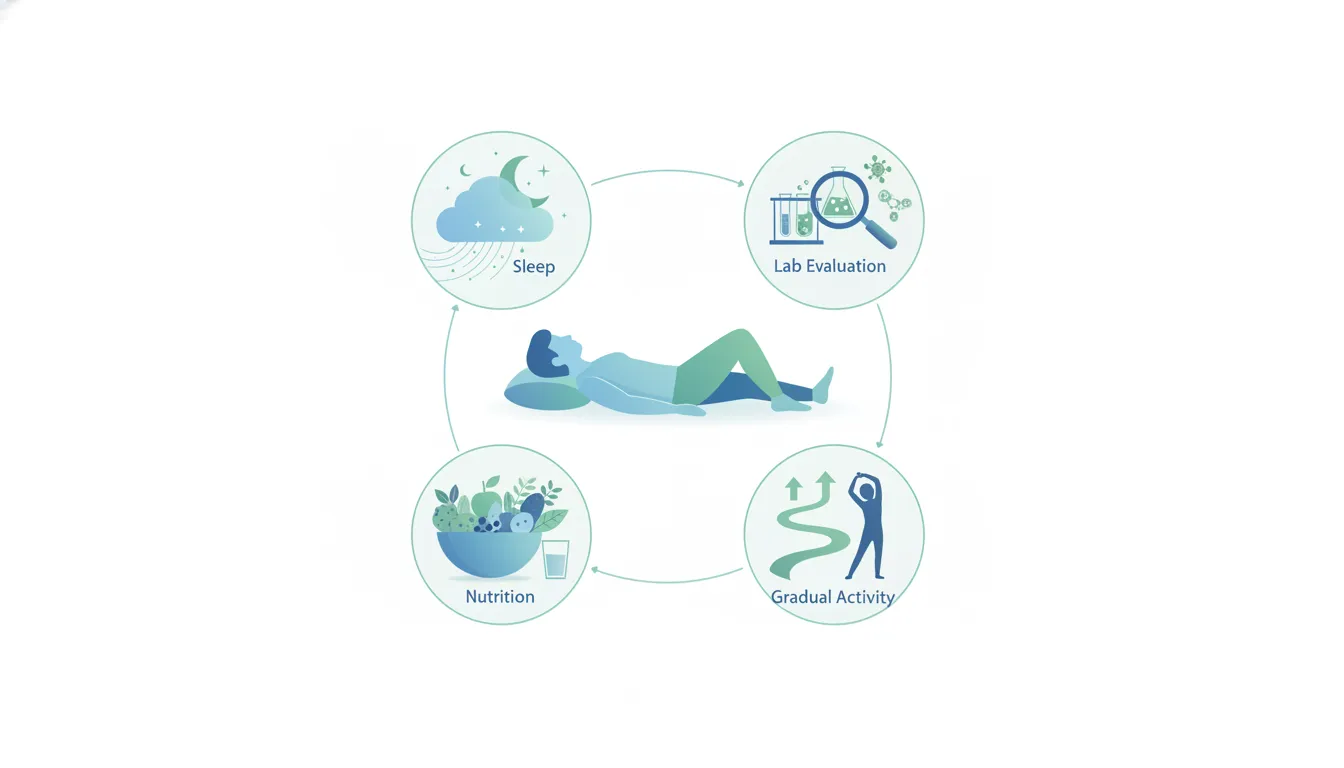
Common Areas a Personalized Plan May Address
Sleep and Circadian Health
Unrefreshing sleep is a core concern for many people with persistent fatigue. A plan may address sleep timing, light exposure, caffeine, evening routines, and possible sleep disorders. If someone snores, wakes gasping, has morning headaches, or remains very sleepy during the day, screening for sleep apnea may be more important than adding another supplement.
Nutrition and Micronutrient Status
A sustainable nutrition plan supports steady energy without rigid restrictions. The priorities often include adequate protein and total calories, fiber-rich foods, hydration, and consistent meals. If testing identifies a deficiency, targeted replacement may be appropriate under clinical supervision.
Supplements should not be treated as automatically harmless. They can interact with medications, duplicate ingredients, and create side effects at high doses. Research has explored nutrients involved in cellular energy, including CoQ10 and NADH, but no supplement is universally effective for chronic fatigue or ME/CFS. Treatment should match the individual’s needs and evidence.
Hormonal and Metabolic Factors
Thyroid disorders, blood sugar dysregulation, and other endocrine issues can affect energy. Symptoms alone cannot confirm a hormone imbalance, so evaluation should begin with an appropriate history and validated testing. For patients whose findings support it, NuGen’s hormone replacement therapy services provide physician-guided evaluation and treatment. Hormone therapy is not an appropriate solution for every case of fatigue.
Movement, Pacing, and Recovery
Movement recommendations must match the diagnosis and current capacity. Someone who is deconditioned may benefit from a gradual, monitored return to activity. A person with post-exertional malaise may need pacing strategies that help avoid symptom crashes. Pushing through severe symptoms can backfire, so exercise plans should be individualized rather than prescribed as a generic cure.
Stress Load and Nervous System Support
Stress can worsen sleep, pain, digestion, and fatigue. But that does not mean fatigue is “all in your head.” Practical support may include realistic workload changes, relaxation practices, counseling, breathing exercises, or better recovery routines. People balancing multiple conditions may find additional ideas in NuGen’s guide to chronic illness support. The goal is to reduce a contributor to symptom burden, not to dismiss the underlying illness.
Medication Review and Coordinated Care
Some medications can contribute to drowsiness or fatigue. A physician can review the full list, including over-the-counter products and supplements, and coordinate changes when appropriate. Never stop a prescription medication abruptly without medical guidance.
How Functional Medicine Care Progresses
A sound plan is usually phased. Trying to change diet, supplements, exercise, sleep, and medications all at once makes it difficult to know what is helping.
- Establish safety and clarify the problem. Rule out urgent concerns, identify likely diagnoses, and define the symptoms that matter most.
- Prioritize high-impact basics. Address sleep, nutrition, medication effects, and clearly identified deficiencies or conditions.
- Add targeted interventions. Use findings and response data to decide what deserves attention next.
- Measure and refine. Track outcomes such as function, post-activity symptoms, sleep quality, pain, concentration, and ability to complete daily tasks.
Progress may not be linear. The most useful measures are often practical: fewer crashes, better concentration, more restorative sleep, or the ability to do more without a delayed worsening of symptoms.
How Functional Medicine Differs From Symptom-Only Care
Conventional medicine is essential for diagnosing disease, treating urgent problems, and managing known conditions. Functional medicine works best as a complement to that foundation, not as a competing system. It can provide more time to map symptoms, habits, exposures, and past findings. It can also help patients turn broad advice such as “sleep better” or “eat healthier” into a plan they can follow and measure.
| Part of care | Standard first-line focus | Functional medicine addition |
|---|---|---|
| History | Identify symptoms, diagnoses, and red flags | Build a detailed timeline and look for connected patterns |
| Testing | Rule out recognized medical causes | Add selected tests only when results may change the plan |
| Treatment | Treat diagnosed conditions and reduce symptoms | Coordinate nutrition, sleep, pacing, stress support, and targeted care |
| Follow-up | Monitor disease markers and symptoms | Track function, triggers, tolerance, and response over time |
The strongest plan uses the right tool for the right problem. For example, iron-deficiency anemia requires appropriate medical evaluation and treatment. Sleep apnea needs a sleep assessment and proven therapy. Post-exertional malaise calls for careful pacing rather than a generic instruction to exercise harder. Functional medicine can connect these needs into one coordinated plan while keeping safety and evidence at the center.
How to Prepare for Your First Appointment
Preparation helps a physician spend less time reconstructing records and more time understanding your symptoms. Start with a one-page timeline. Note when fatigue began, what happened near that time, and how the pattern has changed. Include infections, surgeries, pregnancy, major stress, medication changes, and new health diagnoses. If activity causes a delayed crash, describe when it starts and how long it lasts.
Bring a complete list of prescriptions, over-the-counter medicines, vitamins, herbs, powders, and energy products. Include the dose and how often you use each item. NuGen’s primary care doctor guide offers more questions to consider when choosing a clinician. Supplements may affect symptoms, test results, and medication safety. A complete list helps prevent duplication and interactions.
Gather recent lab reports and specialist notes when available. Avoid ordering a large set of tests before the visit unless a clinician recommends them. More data is not always better data. The goal is to choose tests that answer a useful question or guide a decision.
For one or two weeks, consider keeping a simple log of sleep, meals, activity, symptoms, and energy. Use a short rating scale rather than writing a long diary. Patterns such as afternoon crashes, poor recovery after activity, or symptoms after missed meals may help guide the discussion. The log is a clue, not a diagnosis.
What Realistic Progress Can Look Like
Recovery goals should be specific and personal. “More energy” is difficult to measure. A better starting goal might be preparing breakfast without needing to rest. Completing a work meeting with clearer concentration, or taking a short walk without worse symptoms the next day. These functional measures help a patient and physician see whether a plan is providing meaningful benefit.
Some interventions may help quickly, especially when they correct a clear problem. Others require time and careful adjustment. Improvement can also involve learning how to prevent crashes, even before overall energy rises. That is valuable progress because fewer setbacks may create room for longer-term gains.
Regular follow-up should answer three questions: What improved? What stayed the same? What caused side effects or worsening? Based on those answers, a physician can continue, stop, or modify each part of the plan. Treatments that add cost and complexity without a measurable benefit should be reconsidered.
Patients should be cautious about programs that promise rapid cures, require many expensive products, or blame every symptom on a single unproven cause. Complex fatigue usually deserves a balanced approach. Good care acknowledges uncertainty, explains options clearly, and protects the patient from unnecessary interventions.
Questions to Ask a Functional Medicine Provider
- Which conventional medical causes should we rule out first?
- How will each recommended test change the treatment plan?
- What is the evidence, cost, and limitation of each test or therapy?
- How will you coordinate with my primary care doctor or specialists?
- Which outcomes will we track, and when will we reassess?
- What should I do if an intervention makes symptoms worse?
A trustworthy clinician should explain uncertainty, avoid promising a cure, and be willing to simplify a plan when an intervention is not delivering meaningful value.
Frequently Asked Questions
Can functional medicine cure chronic fatigue?
No responsible clinician can promise a cure. Chronic fatigue has many possible causes, and ME/CFS is a complex illness without one universally effective treatment. Functional medicine can help organize a thorough evaluation and create a personalized management plan.
What tests are used for chronic fatigue?
Testing depends on symptoms and medical history. A physician may begin with blood counts, metabolic and thyroid testing, iron or nutrient status, and other standard assessments. Targeted hormone, digestive, micronutrient, or oxidative stress testing may be considered when it is likely to inform care.
What is the difference between chronic fatigue and ME/CFS?
Chronic fatigue is a symptom. ME/CFS is a specific, debilitating condition characterized by substantial impairment and features that commonly include post-exertional malaise, unrefreshing sleep, and cognitive or orthostatic symptoms. A clinician should make the distinction.
How long does it take to improve persistent fatigue?
It varies widely. Improvement depends on the cause, symptom duration, other conditions, and response to treatment. A phased plan with regular reassessment is more realistic than a fixed recovery timeline.
Build a Plan Around Your Specific Pattern
Persistent fatigue deserves more than dismissal, but it also demands careful medical reasoning. The best functional medicine approach combines appropriate diagnosis, targeted investigation, realistic lifestyle support, and ongoing measurement. It looks for modifiable contributors without overlooking conventional medical care.
NuGen Medicine provides personalized care directly with Dr. Nima Ghadimi, a board-certified internal medicine physician with more than 20 years of experience. Initial consultations and follow-ups can use a hybrid model of telemedicine and in-person care when needed. To discuss your symptoms and the most appropriate next steps, contact NuGen Medicine.
This article is for educational purposes only and does not replace personalized medical advice, diagnosis, or treatment.
Leave a Reply